

Construction site security guards are licensed security officers stationed on active job sites to prevent theft, vandalism, and unauthorized access. Coverage usually focuses on nights, weekends, and holidays, since that is when most job sites sit unattended. This guide explains what the data says about construction theft in California, how site security guards are regulated under state law, what armed and unarmed coverage actually includes, and how guard presence affects insurance and liability. It is meant as a reference for contractors and project managers deciding how to protect an active job site in Los Angeles and the surrounding counties.
The Scale of Construction Theft in the United States and California
Construction and equipment theft is a well-documented problem, not an occasional headline. The National Equipment Register (NER), a database used by insurers and law enforcement to track and recover stolen equipment, estimates that equipment theft alone costs the industry between $300 million and $1 billion a year nationally. The average single theft incident runs around $30,000, according to NER data. When materials and tools are included alongside equipment, the National Insurance Crime Bureau (NICB) places total annual losses even higher.
Recovery is the harder problem. Industry estimates consistently put the recovery rate for stolen construction equipment below 25 percent, meaning most of what disappears from a job site is never seen again. California is regularly named among the top three or four states for reported construction theft, alongside Texas, Florida, and North Carolina, largely because of the volume of active development and the density of high-value equipment sitting on unsecured lots.
Beyond the direct loss, a theft carries indirect costs that often exceed the replacement value of the item taken. A missing excavator or skid steer can halt a pour, delay an inspection, and leave subcontractors billing hours while waiting on equipment that has not arrived.
When and What Gets Targeted
Construction theft is not random. Multiple industry sources tracking incident data report that roughly 70 to 80 percent of equipment theft occurs on weekends, holidays, or overnight, with a large share happening between 6 p.m. and 6 a.m. The NER has documented recurring loss spikes around Memorial Day, the Fourth of July, Labor Day, and Thanksgiving, when sites sit empty for several consecutive days and law enforcement response is stretched thinner than usual.
The most commonly targeted items include:
- Wheeled and tracked loaders, which account for a large share of reported equipment theft due to universal keying and high resale value
- Generators, due to their portability and steady demand in secondary markets
- Copper wiring and plumbing components, which contribute roughly a billion dollars in annual losses across all industries, construction sites included
- Hand and power tools, which are rarely serialized or tracked and are easy to move in bulk
- Catalytic converters and fuel from parked equipment and vehicles left on site overnight
These patterns are exactly why a fixed camera system alone tends to underperform. A camera records an event. It does not interrupt one in progress at 2 a.m. on a Saturday when the nearest person who could respond is asleep across town.
The Regulatory Side: BSIS, PPO Licensing, and What It Means for the Guards on Your Site
Security guard companies in California operate under a state licensing system that most contractors never have a reason to look into closely, but it is worth understanding, since it directly determines who is legally allowed to stand on your job site.
Any company that provides security guards for hire must hold a Private Patrol Operator (PPO) license issued by the California Bureau of Security and Investigative Services (BSIS). That license requires the company to carry general liability insurance of at least $1,000,000 per occurrence, to designate a Qualified Manager responsible for day-to-day operations, and to pass a state background review through the Department of Justice and FBI before the license is granted.
Individual officers are separately licensed. To carry a Guard Card, an officer must complete Live Scan fingerprinting, pass a criminal background check, and complete 40 hours of state-mandated training, including 8 hours before the officer is assigned to a post. Officers who carry a firearm must hold an additional Exposed Firearms Permit, which requires roughly 14 to 16 hours of separate training and periodic requalification.
The practical implication for a contractor: when you hire a security company for a job site, you are contracting with the PPO, and the PPO remains responsible for the training, licensing, and conduct of the officers it assigns. Verifying a company’s PPO number through BSIS before signing a contract is a reasonable step, and any licensed operator should be able to provide it without hesitation.
What Construction Site Security Guards Actually Do
On an active job site, construction site security guards generally handle a specific set of recurring tasks rather than a general “keep an eye on things” role:
- Gate control and a sign-in log for every driver, subcontractor, and delivery
- Overnight and weekend patrols, timed to match the periods when theft is statistically most likely
- Equipment and tool crib checks at set intervals, documented with photos and timestamps
- Perimeter checks covering fencing, lighting, and blind spots around trailers and storage containers
- Written incident reports that include the time, location, and any relevant photo or video evidence
Guards deployed out of a Southern California base, such as Skyhigh Security’s Tarzana office, typically reach most San Fernando Valley, Los Angeles, and Ventura County sites within 24 to 48 hours of an initial request.
Armed or Unarmed: Matching Coverage to Risk


The choice between armed and unarmed coverage depends on what is on the site and the surrounding risk profile, not on a fixed rule.
A residential remodel with basic hand tools is typically well served by unarmed security guards, trained in access control, perimeter patrol, and incident documentation. This is usually the more cost-effective option for lower-risk sites.
A commercial build with generators, catalytic converters, high-value fixtures, or a location in a higher-crime corridor is a different calculation. In those cases, armed security guards, licensed and certified under California’s Exposed Firearms Permit requirements, provide a level of deterrence that unarmed coverage alone does not. A site walkthrough is generally the fastest way to determine which category of coverage a specific project actually needs, based on equipment value, site history, and location.
How Site Security Affects Builder’s Risk Insurance

Most builder’s risk insurance policies include what underwriters refer to as a reasonable security clause, a requirement that the policyholder take proactive steps to reduce the risk of theft, vandalism, and fire on an active site. Insurers increasingly expect documented security measures on projects above a certain value, and several sources in the builder’s risk and inland marine insurance space report premium reductions in the range of 5 to 15 percent for sites with documented guard coverage, GPS-tracked equipment, or monitored camera systems. Conversely, a theft claim on a site without documented security measures can result in a denied claim or a significant premium increase at renewal.
Fencing, lighting, guard patrols, and GPS tracking on high-value equipment are the measures underwriters most commonly ask about when reviewing a claim or setting a renewal rate.
The Liability Side: Trespassers and Premises Liability
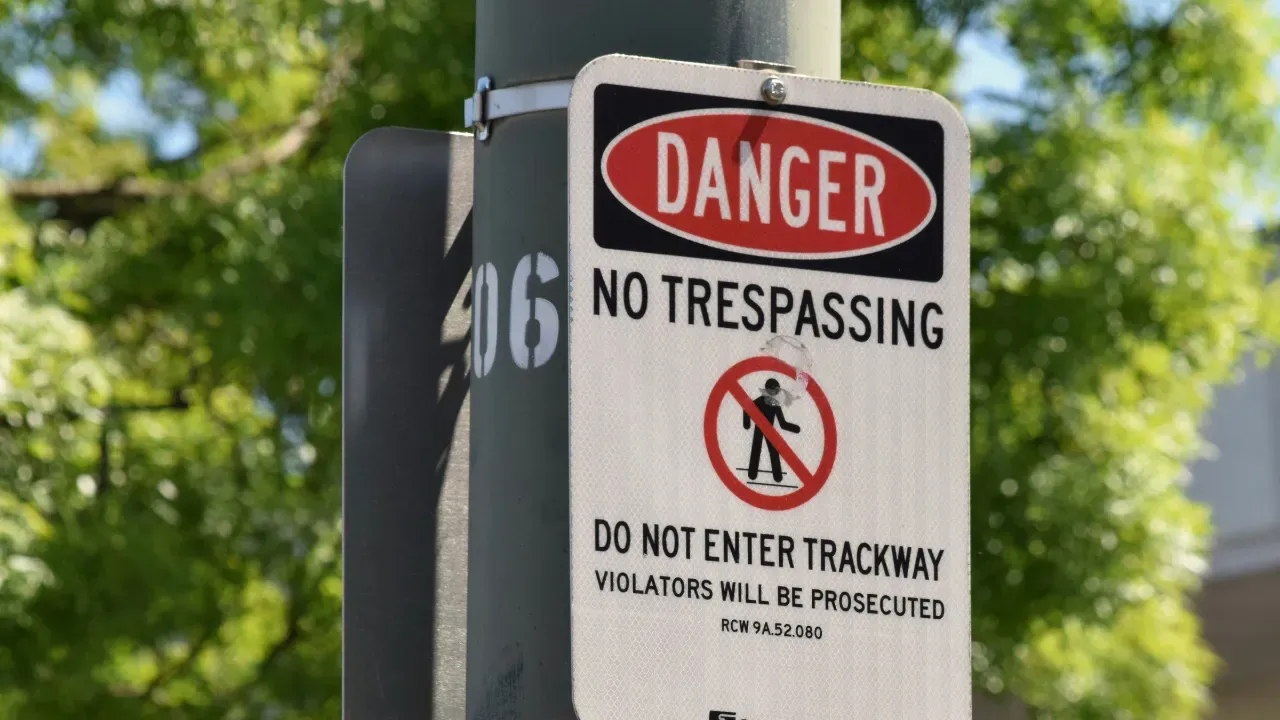
An unsecured construction site is not only a theft risk. It is also a liability exposure. California moved away from the traditional attractive nuisance doctrine used in some other states, but the state’s general premises liability standard, rooted in Civil Code Section 1714 and the California Supreme Court’s decision in Rowland v. Christian, still holds property owners and contractors to a duty of reasonable care toward anyone who might foreseeably enter the site, including trespassers and children.
An open excavation, an unlocked equipment yard, or an unfenced perimeter is exactly the kind of condition that can support a negligence claim if someone is injured after hours. Guard patrols, locked gates, and a documented walk-through at the end of each shift are part of demonstrating that reasonable care was taken, which matters both for preventing an incident and for defending against a claim if one occurs.
A Job-Site Security Checklist
- Perimeter fencing is intact and every gate locks, whether by chain, padlock, or keypad
- Lighting covers the gate, trailer, and equipment staging areas, with no dark corners
- Heavy equipment has VIN or serial numbers logged and photographed
- Keys are kept off-site or in a locked box, never left in the ignition
- Cameras, where installed, cover entry points and are checked weekly for gaps in footage
- A sign-in log is kept for every subcontractor, vendor, and delivery driver
- A guard or supervisor walks the site before locking up each day
- Incident reports are filed the same day, with timestamps and photos where relevant
Frequently Asked Questions

How much does construction site security cost in Los Angeles?
Cost depends on whether the site needs armed or unarmed guards, the number of coverage hours, and the size of the site. Many contractors start with overnight and weekend coverage, since that matches the hours when most theft occurs, and adjust from there based on the site’s actual risk profile.
Do construction sites need armed guards?
Not always. Most residential and light commercial sites are adequately covered by unarmed guards trained in access control and patrol. Armed coverage is more common on large commercial builds, sites with high-value equipment, or locations with a documented theft or crime history.
How fast can guards be deployed to a job site?
In most cases, within 24 to 48 hours of the first call, depending on the scope of coverage and the number of officers required.
What does a security guard’s daily report include?
A time-stamped record of gate activity, patrol rounds, anything found out of place, and any incidents, with photos included where relevant.
Can construction site security lower insurance premiums?
Documented security measures, including guard coverage, GPS-tracked equipment, and monitored cameras, are commonly cited by builder’s risk and inland marine insurers as a factor in premium discounts, typically in the range of 5 to 15 percent, though the exact figure depends on the carrier and the project.
Sources
National Equipment Register (NER), National Insurance Crime Bureau (NICB), California Bureau of Security and Investigative Services (BSIS), California Civil Code Section 1714, Rowland v. Christian (1968).
Get a Site-Specific Assessment
Every job site carries a different risk profile based on its equipment, location, and schedule. Contractors working anywhere in Los Angeles, Ventura County, or the San Fernando Valley can call 818-448-6969 or request a free site walkthrough to get a coverage recommendation based on the specific site rather than a generic package.