
The difference between armed and unarmed guards comes down to three things: what they carry, how they are trained, and what situations they are built to handle. In this we will cover all of it so you can make a confident decision for your property.
What Are Armed Security Guards?
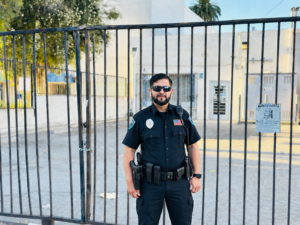
An armed security guard carries a firearm on duty. Before they ever show up to a post, they’ve cleared a background check, passed a written exam, and qualified on a live-fire range. California also requires them to hold two separate government licenses both need to stay active and up to date.
You’ll find our armed security guards at banks, cannabis dispensaries, jewelry stores, and government buildings. Anywhere the loss of cash or inventory isn’t just inconvenient it’s a serious financial hit or a safety risk.
The firearm matters, but honestly the bigger deterrent is just knowing a trained, licensed guard is present. Most criminals do a quick read of a location before acting. An armed guard changes that calculation before anything happens.
What they’re hired for:
Stopping threats before they happen and responding immediately when something goes wrong.
Ideal for:Banks, jewelry stores, cannabis dispensaries, government buildings, armored transport, and anyone who needs a personal protection detail.
Key benefits: Highest level of on-site protection. A visible armed guard changes how criminals assess a location most won’t test it.
Cons: Higher hourly rate than unarmed guards. Insurance costs go up when firearms are on your property. In customer-heavy environments like retail or hospitality, some visitors find it uncomfortable.
Credentials required in California: Background check, written exam, shooting range qualification, and two active government licenses both need regular renewal to stay valid.
What Are Unarmed Security Guards?
Professionals Unarmed security guards are licensed guards who provide security services without carrying a firearm. They undergo background checks, security training, and regular certification to handle a wide range of situations from access control to emergency response. Their visible presence alone is often enough to deter opportunistic crime and maintain a safe environment.
Unarmed security officers are typically deployed in locations where a visible security presence is needed including retail stores, office buildings, schools, hospitals, events, and residential communities
Core Role: Visible deterrence, access control, and first-level response to security incidents.
Best Used For: Retail stores, office buildings, schools, hospitals, corporate campuses, or any site requiring a professional security presence.
Key Benefits: Cost-effective, approachable for customers and employees, and suitable for a wide range of environments.
Considerations: Not equipped to respond to armed threats; best suited for lower-risk environments.
Licensing Requirements for unarmed guards: Valid BSIS Guard Card, background check, written exam, and mandatory pre-assignment training hours.
Typical Duties of an Unarmed Security Guard
Monitoring entry and exit points, checking credentials, and ensuring only authorized individuals enter the premises.
Conducting regular foot or vehicle patrols to detect suspicious activity, safety hazards, or unauthorized access.
Greeting visitors, providing directions, and maintaining a welcoming yet secure environment.
Documenting and reporting any security incidents, suspicious behavior, or safety concerns to management or law enforcement.
Following established protocols during emergencies such as fires, medical situations, or evacuations.
Watching live camera feeds to identify potential threats or unusual activity across the property.
Using communication skills to calm tense situations and resolve minor disputes without physical force.
Monitoring for shoplifting or internal theft in retail environments and reporting incidents accordingly.
Typical Duties of an Armed Security Guard
Maintaining a strong, visible presence to discourage criminal activity, theft, or violent incidents before they occur.
Monitoring and controlling entry and exit points, verifying credentials, and preventing unauthorized access to secured areas.
Guarding cash, jewelry, cannabis inventory, equipment, or other high-value assets that are at risk of theft or robbery.
Conducting regular patrols of the property on foot or by vehicle to detect threats, hazards, or suspicious behavior.
Responding immediately to security threats, violent incidents, or emergencies and coordinating with law enforcement when necessary.
Continuously evaluating the environment for potential risks and making real-time decisions to protect people and property.
Documenting all security incidents, observations, and actions taken in detailed written reports for clients and management.
Accompanying and protecting high-profile individuals in public or private settings where personal safety is a concern.
Overseeing live camera feeds to identify and respond to suspicious activity across the property.
5 Core Difference Between Armed and Unarmed Security Guards
1. Level of Threat and Asset Value: Armed vs Unarmed Security
Armed Security: Best suited for environments where violent crime is a realistic risk banks, cannabis dispensaries, jewelry stores, armored transport, and any location handling large amounts of cash or high-value assets. The firearm is a deliberate deterrent, not just a precaution.
Unarmed Security: Best suited for low to moderate risk environments where the primary need is a visible, professional presence in retail stores, office buildings, schools, hospitals, and residential communities. Their focus is prevention and monitoring, not armed intervention.
2. Customer Experience and Perception: Armed vs Unarmed Security
Armed Security: Creates a strong psychological deterrent that signals serious protection. This works in your favor in high-risk settings but in customer-facing environments like hotels or retail stores, a visible firearm can feel intimidating to visitors and staff.
Unarmed Security: More approachable and less intimidating for everyday customer interactions. They maintain a professional, welcoming presence while still keeping the environment safe and secure.
3. Budget and Training Costs: Armed vs Unarmed Security
Armed Security: Costs 30 to 50 percent more than unarmed guards. The premium reflects advanced firearms training, licensing fees, permit renewals, and higher insurance costs. Best justified when the risk level genuinely requires it.
Unarmed Security: More cost-effective for businesses that need consistent security coverage without the additional expense of firearms licensing and advanced training. A practical choice for lower-risk environments with tighter budgets.
4. Insurance and Liability: Armed vs Unarmed Security
Armed Security: Comes with higher insurance premiums and greater liability exposure. If a firearm is discharged on your property, your business becomes part of the legal process. Working with a properly licensed and insured provider is essential to managing that risk.
Unarmed Security: Carries significantly lower liability. No firearm means a much smaller scope of potential incidents, making it a safer option from an insurance and legal standpoint for most standard business environments.
Skyhigh Security Services provides BSIS licensed armed guards in Los Angeles and also covers the cities of California.
5. Local Laws and Regulations: Armed vs Unarmed Security
Armed Security: Subject to strict state and local regulations. In California, armed guards must hold both a BSIS Guard Card and a valid Firearms Permit each with their own background checks, exams, and renewal schedules. Always verify your provider meets every legal requirement before deployment.
Unarmed Security: Requires a valid BSIS Guard Card and completion of mandatory training hours. Regulations are less complex than armed licensing but still must be met in full. A licensed provider ensures full compliance without the additional regulatory burden of firearms permits.
When Should Businesses Use Armed Security Guards?
Armed security guards are the right choice when the risk level at your location is genuinely high and a visible, armed presence is necessary to deter serious threats.
You should hire armed security if your business:
- Handles large amounts of cash daily, such as banks, check-cashing locations, or ATM servicing operations
- Stores or sells high-value assets like jewelry, cannabis inventory, luxury goods, or expensive equipment
- Operates in a high-crime area where the risk of robbery or violent incidents is elevated
- Requires executive or personal protection for high-profile individuals
- Transports valuables through armored vehicles or cash-in-transit operations
- Has experienced prior security incidents involving weapons or threats of violence
- Operates in a remote or isolated location where police response times are long
When Should Businesses Use Unarmed Security Guards?
Unarmed security guards are the right choice when your primary need is a visible, professional presence that deters opportunistic crime, manages access, and keeps daily operations running smoothly.
You should hire unarmed security if your business:
- Operates in a low to moderate risk environment like a retail store, office building, school, or hospital
- Needs someone to manage access control, check credentials, and monitor entry and exit points
- Wants security that feels approachable and non-intimidating to customers, patients, or students
- Hosts events like corporate gatherings, community functions, or conferences without credible threat history
- Needs CCTV monitoring, patrol coverage, or incident reporting without armed intervention
- Has a tighter budget but still requires consistent, professional security coverage
Frequently asked questions
Is armed security more expensive?
Yes. Armed guards cost 30 to 50 percent more per hour. More training, more licenses, higher insurance. If your business handles cash or high-value inventory, the cost is justified. For a standard office, probably not.
Can unarmed guards detain someone?
Yes, but they can’t use force like a police officer. They can hold a situation, call law enforcement, and document what happened. Most of the time that’s all you need.
What license does an armed guard need in California?
Two licenses a BSIS Guard Card and a state Firearms Permit. Both require background checks. Both need regular renewal. If a provider can’t show you both, don’t hire them.